

The most dangerous part of your home’s electrical system isn't a faulty wire; it's a missing paper trail that leaves you legally exposed. Many Newcastle homeowners and landlords feel a genuine sense of dread when they hear the term domestic electrical safety certificate, often fearing a mountain of jargon or a "cowboy" electrician inventing faults to pad a bill. It's completely understandable to feel overwhelmed by the technical divide between an EICR and a Part P notification, especially when the stakes include a potential £40,000 fine for non-compliance under the current 2026 regulations.
We're here to replace that uncertainty with total control and professional clarity. You’ll learn how to navigate the current legal landscape, distinguish between essential repairs and minor recommendations, and secure your property’s future value. This guide breaks down the inspection process, explains how to vet your electrician, and shows you how to use a digital Home Passport to ensure your safety records are organised and accessible for years to come.
Key Takeaways
- Understand why a formal Electrical Installation Condition Report (EICR) is the only valid way to obtain a domestic electrical safety certificate and protect your property.
- Stay compliant with 2026 UK regulations by adhering to the mandatory five-year inspection cycle for rental properties to avoid fines of up to £40,000.
- Prepare your Newcastle home efficiently by clearing access to your consumer unit and safeguarding sensitive electronics before the multi-hour inspection begins.
- Discover how a digital Home Passport centralises your safety records, ensuring your certification is never lost and remains ready for future house sales.
What is a Domestic Electrical Safety Certificate (EICR)?
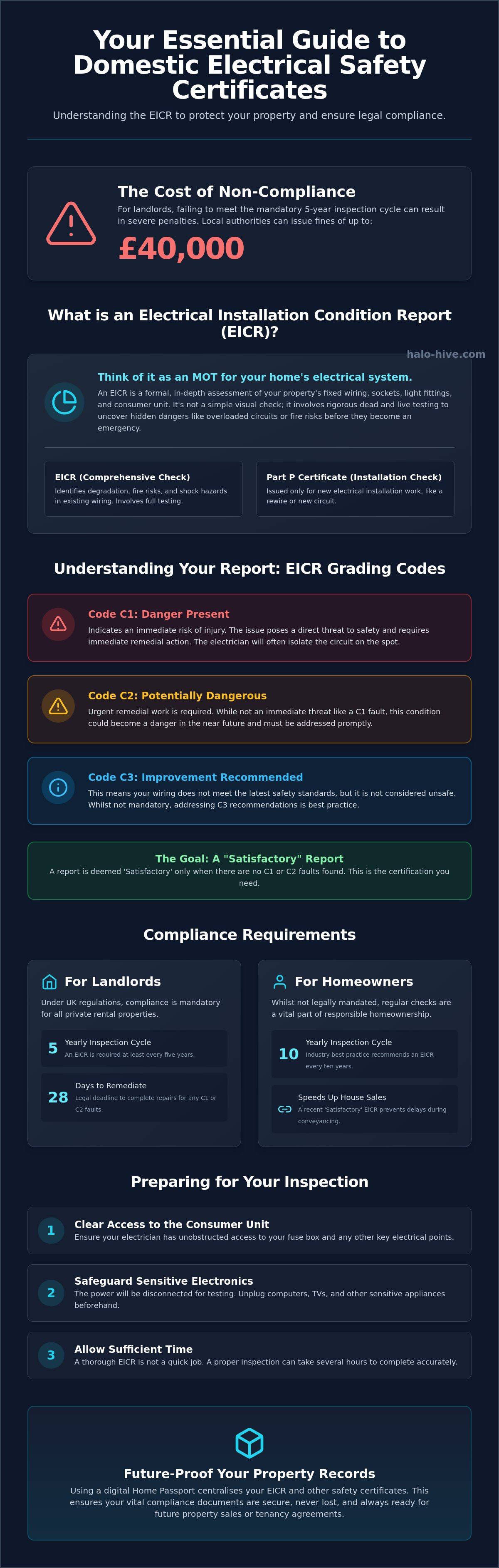
An Electrical Installation Condition Report, or EICR, serves as the definitive health check for your property's invisible infrastructure. While many people colloquially refer to this document as a domestic electrical safety certificate, it's far more than a simple tick-box exercise. It's a formal, technical assessment that evaluates the safety of the fixed wiring, sockets, light fittings, and the consumer unit. Think of it as an MOT for your home's electrical system, ensuring everything behind the walls meets the rigorous UK electrical wiring standards required for modern living.
Homeowners often confuse an EICR with a Part P certificate, but they serve different purposes. A Part P document is issued when new electrical work is installed, such as a full house rewire or a new kitchen circuit. In contrast, an EICR assesses the condition of existing wiring that may have degraded over time. Its core mission is to identify potential fire risks, detect electric shock hazards, and reveal overloaded circuits before they lead to an emergency. By the time you notice a flickering light or a warm socket, the underlying issue might already be critical.
The Anatomy of an EICR Report
Every report follows a structured grading system to provide total transparency. Your electrician will assign specific codes to any observations they find during the inspection:
- C1 (Danger Present): Risk of injury is immediate. The electrician will usually fix this on the spot or isolate the circuit to keep you safe.
- C2 (Potentially Dangerous): Urgent remedial work is required. This isn't an immediate threat, but it could become one soon.
- C3 (Improvement Recommended): This indicates your wiring doesn't meet the latest 2026 standards but isn't necessarily unsafe.
Securing a "Satisfactory" result is the ultimate goal. Once achieved, this digital record becomes a vital asset in your Home Passport, proving your commitment to safety when it's time to sell or let your property. Only electricians registered with bodies like NAPIT or NICEIC possess the authority to issue these reports, ensuring every check meets the highest professional standards.
EICR vs Visual Inspections
Don't be misled by "visual-only" checks. A surface-level glance cannot detect a loose connection inside a wall or a failing earth wire buried in the foundations. A professional EICR involves both "dead testing" and "live testing." During dead testing, the electrician disconnects the power to check the integrity of the insulation. Live testing involves "tripping" your RCDs to ensure they cut the power fast enough to prevent a fatal shock. This rigorous screening is why a thorough inspection takes several hours. Using a platform that prioritises vetted trade professionals ensures your inspector has the technical expertise to perform these complex tests accurately, rather than just glancing at your fuse box.
Is an Electrical Safety Certificate Mandatory in 2026?
Compliance is no longer a matter of choice for the modern landlord. Under the Electrical Safety Standards in the Private Rented Sector (England) Regulations 2020, every private rental property must undergo a rigorous inspection at least every five years. As we move through 2026, a massive volume of these certificates is reaching its expiry date, creating a surge in demand for qualified inspectors. Missing this deadline isn't just a safety risk; it's a significant financial liability. Local authorities have the power to issue civil penalties of up to £40,000 for breaches, a figure that was increased on 1 November 2025 to reflect the gravity of tenant protection. You can find the full details in the government electrical safety standards documentation.
Homeowners living in their own properties aren't legally bound by the same five-year mandate, yet the domestic electrical safety certificate remains a vital document for them too. Industry best practice suggests an inspection every 10 years for owner-occupied homes to ensure the wiring hasn't degraded. This becomes particularly relevant during the conveyancing process. If you decide to sell your Newcastle home, a proactive EICR prevents buyers from using "unknown electrical risks" as a tactic to negotiate a lower price. It provides a clean bill of health that speeds up the legal exchange.
Landlord Obligations and Penalties
Speed is essential if your report comes back with a "C1" or "C2" fault. You are legally required to complete any remedial work within 28 days, or even sooner if the inspector specifies it. Once the work is finished, you must provide written confirmation to your tenant and the local authority. Managing these timelines can be stressful, but you can book your Electrical Safety Checks through Halo Hive to ensure you're using a vetted professional who understands these strict deadlines.
Home Insurance and Safety Certificates
Insurance providers are becoming increasingly meticulous about the age and condition of domestic wiring. While a domestic electrical safety certificate might not be a standard requirement for every policy, having one acts as a powerful safeguard. If an electrical fire occurs, a valid EICR proves you've exercised due diligence. This evidence makes the claims process significantly smoother, as it negates any suggestions of property negligence. It’s about more than just paperwork; it’s about establishing a verified history of care for your most valuable asset.
What to Expect During Your Newcastle Electrical Inspection
Preparation is the key to a stress-free inspection. For a standard Newcastle semi-detached property, you should expect the process to take between two and four hours. This isn't a simple visual walkthrough; your electrician will be meticulously testing every circuit in the building. To ensure a smooth experience, you must provide clear access to your consumer unit, the electricity meter, and a representative number of sockets and light switches across every room. If your fuse box is tucked away in a crowded cellar or a cluttered hallway cupboard, clearing that space beforehand is essential for a thorough domestic electrical safety certificate assessment.
Plan for a significant "power off" period. Whilst the electrician performs dead testing to check the integrity of your wiring, they'll need to isolate the entire system. This means no Wi-Fi, no heating, and no kitchen appliances for a large portion of the visit. If you're working from home or managing a busy household, it's best to schedule this during a window where the lack of power won't cause a disruption. This temporary inconvenience is a small price to pay for the rigorous verification of your home's structural integrity.
Newcastle’s unique architectural heritage brings specific challenges. Whether you own a classic Tyneside flat in Heaton or a grand Victorian terrace in Jesmond, older properties often hide legacy wiring that doesn't align with modern safety protocols. These properties frequently feature thick stone walls or original floorboards that can make accessing certain cables more complex, which is why hiring an inspector familiar with the local housing stock is a distinct advantage.
Common Faults Found in Older Homes
Older Newcastle properties often fall short in three specific areas. Many aging consumer units lack RCD (Residual Current Device) protection, which is the primary defence against fatal electric shocks. We also frequently see inadequate earthing to gas and water services, a critical safety gap in houses built before modern regulations. Finally, "DIY bodges" from previous decades, such as daisy-chained sockets or unsafe bathroom lighting, are common culprits that can lead to an unsatisfactory report.
Interpreting the Results
Receiving an "Unsatisfactory" report can feel daunting, but it's simply a roadmap to a safer home. If your domestic electrical safety certificate highlights C1 or C2 faults, you have a 28-day legal window to complete the necessary remedial works. This ensures any immediate dangers are neutralised quickly. Once the repairs are finished, your electrician will issue a follow-up document to clear the report. You can book these vetted repairs through Halo Hive to ensure the work is carried out by a professional who will provide the necessary evidence to update your digital Home Passport.
Preparing Your Home for an Electrical Safety Check
A successful inspection begins long before your electrician rings the doorbell. To ensure the process for your domestic electrical safety certificate is as efficient as possible, you should start by clearing the area around your consumer unit and electricity meter. These hubs are frequently hidden behind coats, shoes, or stacks of storage boxes. Providing unobstructed access allows the professional to begin work immediately without the friction of moving heavy items. If your fuse box is located in a poorly lit cellar or a tight under-stairs cupboard, ensure the path is clear and any local lighting is functional.
Protect your technology by unplugging sensitive electronic equipment. During the inspection, the electrician will perform insulation resistance tests that involve sending high-voltage signals through your wiring. Whilst modern surge protectors offer some defence, the safest approach is to physically disconnect computers, televisions, and smart home hubs. It is also the perfect time to mention any known quirks to the professional. If you have noticed flickering lights or a socket that feels warm to the touch, highlighting these "red flags" early helps the inspector focus their attention on potential problem areas.
Access must be granted to every room in the property, including lofts, garages, and cellars where fixed wiring might be present. If you have pets, secure them in a separate room or a crate to allow the electrician to move freely between circuits without distraction or safety risks. This organised approach demonstrates that you take the structural integrity of your home seriously and helps the visit stay within the predicted two to four-hour window.
Documentation You Should Gather
Efficiency is driven by data. If you have previous EICR reports, Part P certificates from recent kitchen renovations, or records of an extension, have them ready for review. These documents provide a historical roadmap of your home's electrical evolution. For those using modern digital tools, ensure your Halo Hive Home Passport login is accessible. This allows you to upload the new certificate instantly, creating a permanent, unlosable record that adds tangible value to your property's digital identity.
Minimising Disruption
Timing matters for busy households. Booking a morning slot is often the most effective way to manage the "power off" period, as it allows the work to be completed before the evening rush. If you are a landlord booking on behalf of tenants, clear communication is vital to ensure they are prepared for the temporary loss of Wi-Fi and power. You can book your Electrical Safety Checks through a streamlined interface that removes the admin burden, allowing you to coordinate with occupants and professionals with total transparency.
Future-Proofing Your Property with the Halo Hive Home Passport
The 2026 UK housing market has reached a tipping point where physical filing cabinets and loose paper records are no longer sufficient. Modern buyers and tenants expect a transparent, digital-first approach to property management. The Home Passport acts as your property’s digital identity, transforming a one-off domestic electrical safety certificate into a permanent, verifiable asset. By centralising your electrical, gas, and cleaning records in one secure location, you eliminate the risk of lost paperwork whilst building a comprehensive narrative of care for your home.
Proving a "gold standard" maintenance history adds tangible value to your investment. When every repair and inspection is logged by a vetted professional, you remove the "trust gap" that often stalls property transactions. Newcastle residents increasingly rely on this tech-forward guardian model to ensure their homes aren't just safe, but also market-ready at a moment's notice. It is about moving beyond reactive repairs and embracing a meticulous, organised strategy for property health. This digital logbook creates a sense of total control, providing the structural integrity that modern lenders and insurers now demand.
Selling Your Home with Confidence
Speed is the currency of the modern property market. During the enquiries stage of a sale, having instant access to your domestic electrical safety certificate can shave weeks off the conveyancing process. You can provide solicitors and potential buyers with instant access to your certificates, standing out amongst other listings that rely on vague verbal assurances. A verified maintenance log acts as a powerful trust signal, showing that the property has been maintained by qualified experts rather than unverified trades. It replaces uncertainty with professional evidence, allowing you to negotiate from a position of strength.
Booking Your Next Check
Managing a property shouldn't feel like an administrative burden. The Halo Hive interface is designed for maximum efficiency, allowing Newcastle residents to schedule inspections through a seamless booking system. Because the platform tracks your property’s specific timeline, you’ll receive automated reminders for your next five-year or ten-year inspection. This ensures you never miss a legal deadline or insurance requirement. You can take the first step toward a more organised home today. Protect your Newcastle home and book a vetted electrical safety check today.
Securing Your Property’s Digital Future
Maintaining a safe home shouldn't be a source of anxiety. By understanding the legal mandates for landlords and the safety benefits for homeowners, you've taken the first step toward total property control. A domestic electrical safety certificate is no longer just a loose sheet of paper; it’s a vital component of your home’s permanent identity. Transitioning to digital records ensures you're always prepared for a surprise inspection, an insurance claim, or a future house sale.
You can eliminate the friction of finding reliable help by using a platform that prioritises rigorous vetting and user protection. Access 24/7 instant booking convenience and connect with Newcastle-based vetted professionals who understand the nuances of local housing. Every check includes a secure digital Home Passport to keep your records organised and accessible forever. Book your vetted Newcastle electrician and secure your Home Passport today. Your peace of mind is the ultimate return on investment.
Frequently Asked Questions
How much does a domestic electrical safety certificate cost in Newcastle?
The investment required for an inspection depends on your property's size and the complexity of its electrical circuits. Larger Newcastle homes with multiple consumer units or recent extensions will naturally take longer to assess than a standard flat. Choosing a professional who provides a clear, transparent breakdown of the testing scope ensures you receive a thorough report without any hidden surprises or unexpected fees.
How long is an EICR valid for in a private domestic home?
For private rental properties, the report is valid for five years under current UK legislation. Homeowners living in their own properties should aim for an inspection every 10 years to maintain consistent safety. If you notice signs of wear or undertake significant renovations, booking a fresh check sooner is a sensible precaution for your family’s total protection and peace of mind.
Can I sell my house without an electrical safety certificate?
You can legally sell a house without one, but it's rarely advisable in the current competitive market. Most modern buyers and their solicitors will request a domestic electrical safety certificate during the conveyancing process to verify the home's structural integrity. Lacking this document can lead to significant delays or aggressive price negotiations from cautious buyers who fear hidden repair costs.
What is the difference between an EICR and a PIR?
An EICR is the modern, comprehensive standard for assessing electrical safety, whereas a PIR (Periodic Inspection Report) is an obsolete term. Whilst the goals are similar, the EICR provides a more detailed technical breakdown aligned with the latest 18th Edition wiring regulations. It's the only document recognised for legal compliance in the 2026 rental market and amongst sophisticated property professionals.
Do I need to move furniture for an electrical safety inspection?
You don't need to empty every room, but you must provide clear access to the consumer unit and a representative sample of sockets and switches. Clear away any heavy furniture or storage boxes blocking the fuse box before the electrician arrives. This meticulous preparation allows the professional to move efficiently between circuits, reducing the time they spend in your home whilst ensuring every test is accurate.
What happens if my electrician finds a C1 fault during the check?
A C1 fault indicates immediate danger to life or property, such as exposed live wires or a critical system failure. Your electrician is duty-bound to take immediate action, which usually involves fixing the issue on the spot or isolating the dangerous circuit. They can't leave the property in an unsafe state, so be prepared for a temporary loss of power to that specific area until it's secured.
Is an EICR legally required for homeowners who are not landlords?
No legal mandate currently exists for owner-occupiers to hold a domestic electrical safety certificate, unlike the strict five-year rule for landlords. However, holding a valid report is often a condition of modern home insurance policies. It serves as vital evidence that you've maintained your property to professional standards, providing an essential layer of protection for your household and your investment.
How do I check if my electrician is properly registered and vetted?
You can verify an electrician’s credentials by checking the NAPIT or NICEIC online registers directly. These bodies ensure that the professional has the correct qualifications and insurance to perform safety inspections. Alternatively, using a platform that handles the vetting for you ensures every trade professional has been rigorously screened for both technical skill and reliability, removing the stress of manual verification.


